
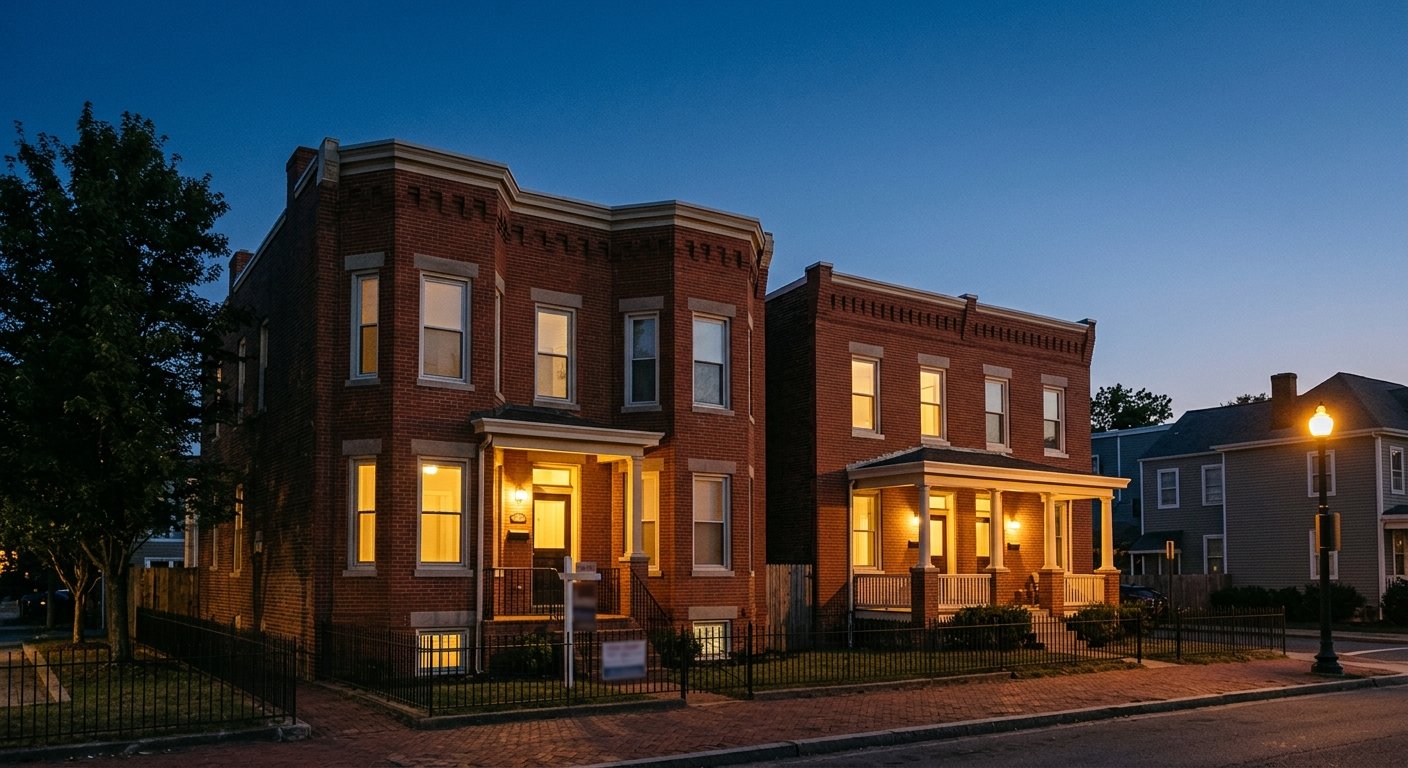
DSCR Loans for Investors in DC, Maryland & Virginia: Qualify on Rent, Not Your Tax Return
No personal income verification, no tax returns — just one ratio that decides whether a rental property qualifies itself.
Self-employed investors and people building a rental portfolio run into the same wall over and over: your tax returns are optimized to minimize taxable income, which is exactly what tanks your debt-to-income ratio on a conventional loan application. DSCR loans exist for precisely this problem. Instead of asking “what does your tax return say you earn,” a DSCR loan asks a much simpler question: “does this property’s rent cover its own mortgage payment?” If the answer is yes, your personal income often doesn’t even enter the conversation.
Short answer: DSCR (Debt Service Coverage Ratio) loans qualify a rental property based on its rental income relative to its mortgage payment, not the borrower’s personal income or tax returns. Most DMV lenders want to see a DSCR of 1.0 or higher — meaning the rent covers the full mortgage payment — though some programs allow lower ratios with a larger down payment.
The MathWhat DSCR actually means
DSCR stands for Debt Service Coverage Ratio, and the formula is simpler than it sounds:
DSCR = Monthly Rental Income ÷ Monthly PITIA
PITIA = Principal, Interest, Taxes, Insurance, and Association dues (if applicable). A DSCR of 1.25 means the property generates 25% more in rent than its total monthly housing payment.
A DSCR of exactly 1.0 means the rent exactly covers the mortgage payment — breakeven. Above 1.0 means the property cash-flows. Below 1.0 means the rent doesn’t fully cover the payment, which most lenders will still finance, just usually with a larger down payment or a rate adjustment to offset the added risk.
Why Investors Choose ThisThe appeal beyond just qualifying
- No personal income documentation. No W-2s, no tax returns, no DTI calculation on your personal finances.
- Close in an LLC. Most DSCR loans allow the property to close under a business entity, which many investors prefer for liability and portfolio-management reasons.
- Scale faster. Because approval is tied to the property, not a cap on your personal DTI, investors can often add properties to a portfolio faster than conventional financing allows.
- Works for self-employed and 1099 investors whose tax returns understate their real cash flow.
DMV Rent MathWhat this looks like in this market
The DMV’s rent-to-price ratio varies sharply by submarket, which makes DSCR math especially worth running before you make an offer — not after. A rowhouse in parts of Prince George’s County or Southern Maryland can post a DSCR above 1.2 at a price point where a comparable property in Northern Virginia or DC proper might land closer to 0.85–0.95, simply because purchase prices and achievable rents don’t move at the same rate across the region.
That’s not a reason to avoid the higher-priced submarkets — appreciation and tenant quality tell a different story there — but it does mean your down payment and rate expectations should shift depending on where in the DMV you’re buying.
What Lenders Typically RequireBeyond the ratio itself
- A signed lease or a market rent estimate from an appraiser (via a 1007 rent schedule)
- Down payment typically starting around 20–25%, though this varies by DSCR and lender
- Credit score minimums that vary by lender, commonly in the mid-600s or higher for the best terms
- Reserves — several months of the property’s mortgage payment held in savings after closing
DSCR Ratio Calculator
Plug in a property’s numbers to see where it lands. This is a planning estimate — lenders will use their own appraisal and underwriting figures.
PITIA = Principal, Interest, Taxes, Insurance, and Association dues. This estimate does not reflect a specific lender’s underwriting.
Frequently Asked Questions
What DSCR ratio do I need to qualify?
Most DMV lenders look for a DSCR of 1.0 or higher, meaning rent covers the full mortgage payment. Some programs allow ratios as low as 0.75–0.85 with a larger down payment or rate adjustment.
Do I need to show my personal tax returns for a DSCR loan?
Typically no. DSCR loans are qualified primarily on the property’s rental income relative to its payment, not the borrower’s personal income, W-2s, or tax returns.
Can I close a DSCR loan in an LLC?
Yes, in most cases. Closing under a business entity is one of the more common reasons investors choose DSCR financing over conventional loans.
What down payment do DSCR loans in the DMV typically require?
Down payment requirements vary by lender and by the property’s DSCR, but 20–25% is a common starting range, with some programs requiring more for lower-ratio properties.
Are DSCR loan rates higher than conventional investment property loans?
DSCR loan rates can run higher than conventional financing, reflecting the different underwriting approach. The exact difference depends on the lender, the property’s DSCR, and current market conditions.
Have a property you want to run the numbers on?
Get matched with a listed mortgage broker who writes DSCR loans across DC, Maryland, and Virginia.