
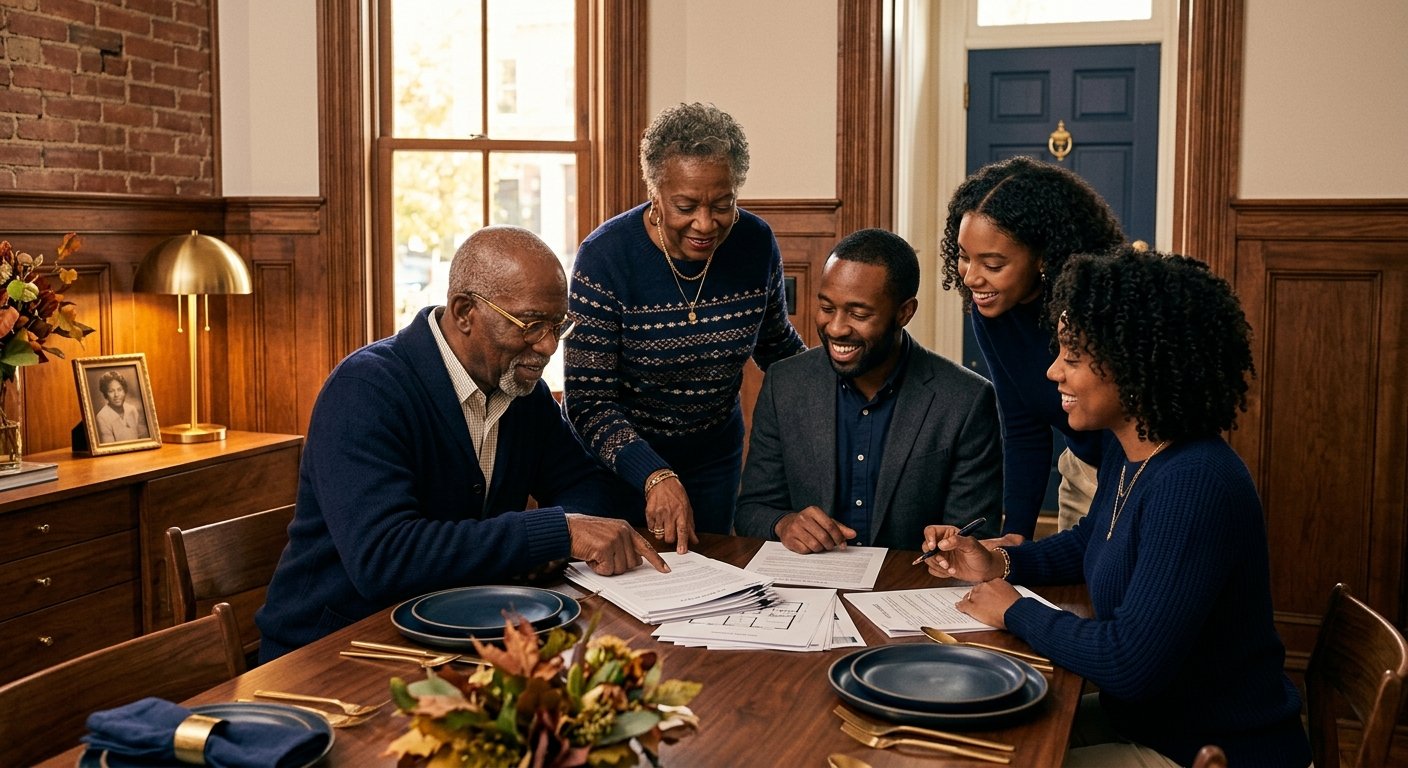
Protecting Your Family’s Home: Why Every Black Homeowner in the DMV Needs an Estate Plan
No will doesn’t mean no problem. It means the county decides — and it rarely decides in your family’s favor.
One of the quietest ways Black families lose homes has nothing to do with foreclosure or a bad mortgage. It happens when a homeowner passes away without a will, and the home — instead of going cleanly to one person — becomes co-owned by every legal heir at once: siblings, cousins, sometimes people who’ve never even seen the property. This is called heirs’ property, and it’s one of the most preventable, least talked-about threats to Black family wealth in this entire region.
Heirs’ property occurs when a homeowner dies without a will (or with an outdated one), and state intestacy law divides ownership of the home among all legal heirs as co-owners — often creating a dozen or more partial owners of a single house. Any one heir can force a court-ordered sale of the entire property, even against every other heir’s wishes, frequently at a below-market price. A properly drafted will, or better, a living trust, keeps the property out of this process entirely and ensures it passes according to your actual wishes.
Don’t leave your family’s biggest asset to a courtroom.
Connect with a Black-owned estate planning attorney in DC, Northern Virginia, or Southern Maryland.
Find a DMV Estate Planning AttorneyHow a Family Home Turns Into Heirs’ Property
- The homeowner passes away without a will. State intestacy law then determines who inherits — and it splits ownership among all legal heirs equally, regardless of who actually lives in or maintains the home.
- Ownership fractures with each generation. If one of those heirs later dies without a will, their share splits again among their own heirs — meaning a home can end up with a dozen or more partial owners within two generations.
- Any single co-owner can force a sale. Under a legal process called partition, one heir — even someone who owns a small fraction and has no relationship to the property — can petition a court to force a sale of the entire home, often at auction, well below market value.
Why This Disproportionately Affects Black Families
| Contributing Factor | Why It Matters |
|---|---|
| Historical distrust of the legal system | Many Black families historically avoided formal estate planning due to a justified distrust of courts and lawyers |
| Lack of access to affordable legal services | Estate planning has often been marketed as something only wealthy families need |
| Generational wealth concentrated in one asset | When the family home IS the primary asset, losing it to a forced partition sale erases decades of built equity at once |
The Documents That Actually Prevent This
- A valid, updated will: The baseline document specifying exactly who inherits the property — still subject to probate, but it removes the guesswork of intestacy law.
- A living trust: Often the stronger option for real estate — property held in a trust can pass directly to beneficiaries without going through probate at all, which is faster, more private, and harder to contest.
- A transfer-on-death or beneficiary deed (where available in your jurisdiction): Names a beneficiary who automatically receives the property outside of probate.
- Clear communication with your heirs: A well-drafted document paired with a family conversation about intent prevents disputes before they start.
📋 Heirs’ Property Risk Self-Check
Check anything that applies to your family’s situation.
One conversation with the right attorney can protect generations.
Find a Black-owned estate planning attorney in our directory who can put the right documents in place.
Protect My Family’s HomeFAQ: Heirs’ Property and Estate Planning for DMV Homeowners
What happens to my home if I die without a will?
Your state’s intestacy law determines who inherits, typically dividing ownership equally among your legal heirs — which can create multiple co-owners of a single property, none of whom individually control it.
Can one heir really force the sale of a family home?
Yes. Through a legal process called partition, any co-owner — regardless of how small their ownership share is — can petition a court to force a sale of the entire property, sometimes at auction and below market value.
Is a will enough, or do I need a trust?
A will is a meaningful starting point, but it still goes through probate. A living trust can let real estate pass directly to your beneficiaries without probate, which is often faster, more private, and more resistant to disputes.
Is estate planning only necessary for wealthy families?
No — this is one of the most damaging misconceptions. If your family’s primary asset is a home, protecting it with proper documents matters just as much (arguably more) than for families with diversified wealth spread across many assets.
What if my family already has an heirs’ property situation?
An estate planning or real estate attorney can help evaluate options, which may include a family settlement agreement, a buyout among heirs, or other legal strategies to resolve the ownership structure — this is worth addressing sooner rather than later, before disagreements harden.